


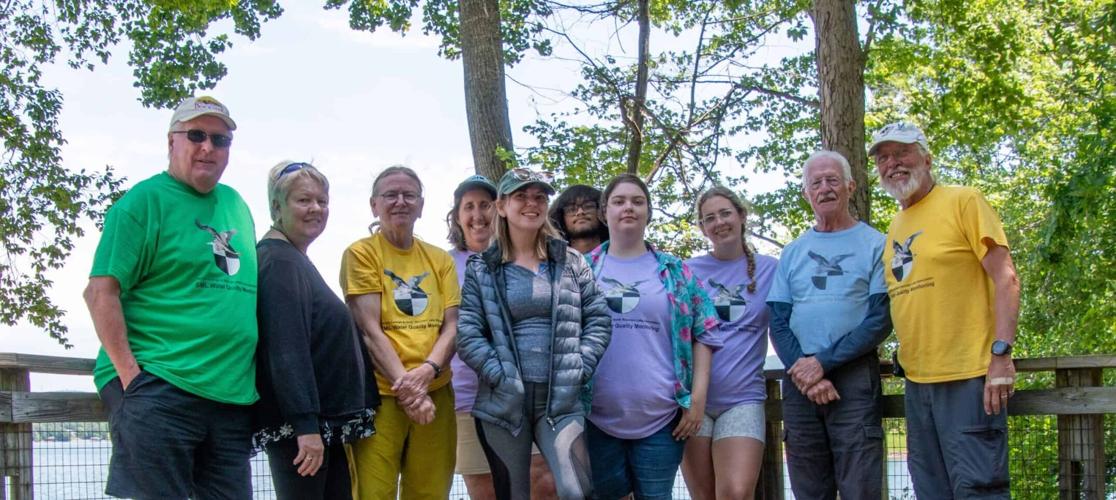

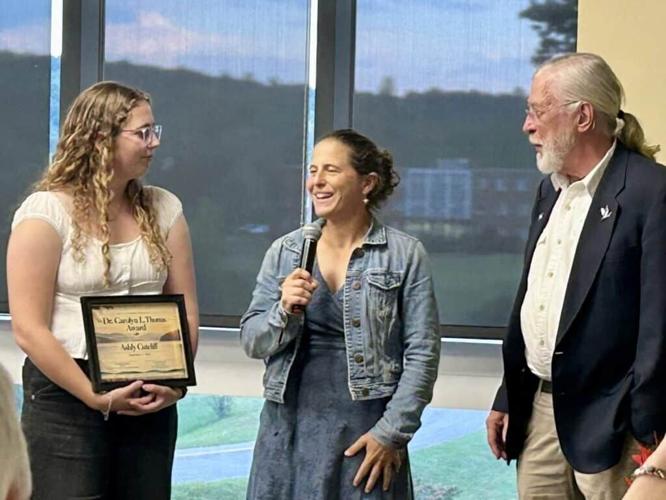
Ferrum, VA, September 25, 2026 — Ferrum College senior Ashly Cutcliff received the first Carolyn L. Thomas Award when the Smith Mountain Lake Water Quality Monitoring Program, a collaboration between Ferrum College and the Smith Mountain Lake Association (SMLA), celebrated their fortieth anniversary with a dinner at Ferrum College on September 11.
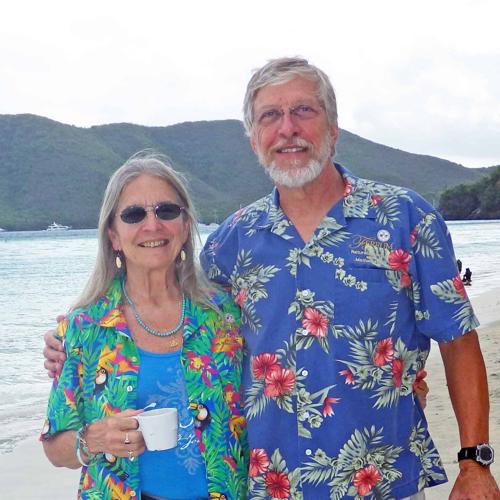
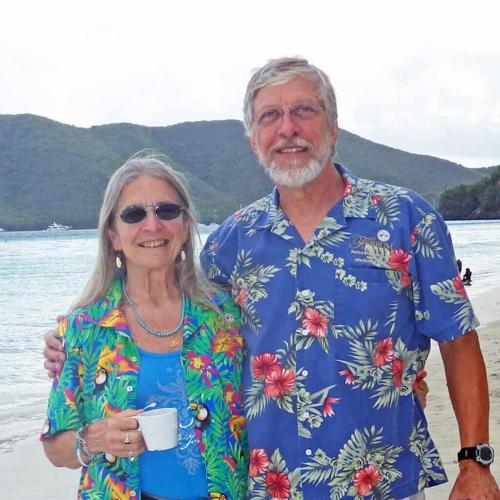
Professor Emerita Thomas, an environmental engineer who taught biology and environmental science at Ferrum College for forty years, began the water quality program in 1986-87 with Professor Emeritus David Johnson. The award was made possible by a memorial fund intended to support student work and established after Thomas died in January 2020.
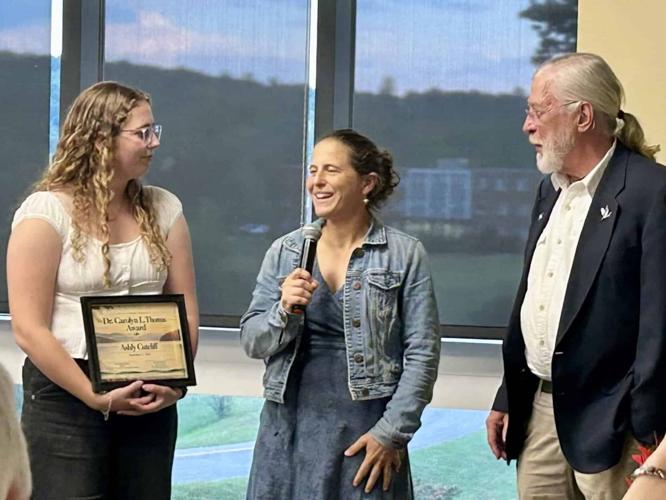
Professor Emeritus Bob Pohlad, with Instructor of Biology Chekka Lash, presented the award to Cutcliff at the end of the anniversary celebration. With her major in environmental sustainability, she plans to pursue a master’s degree in GIS (Geographic Information Systems) after graduating this semester.
People are also reading…
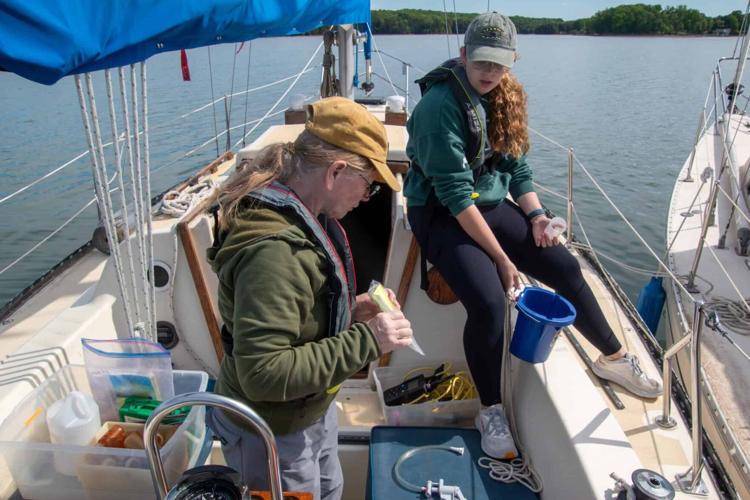
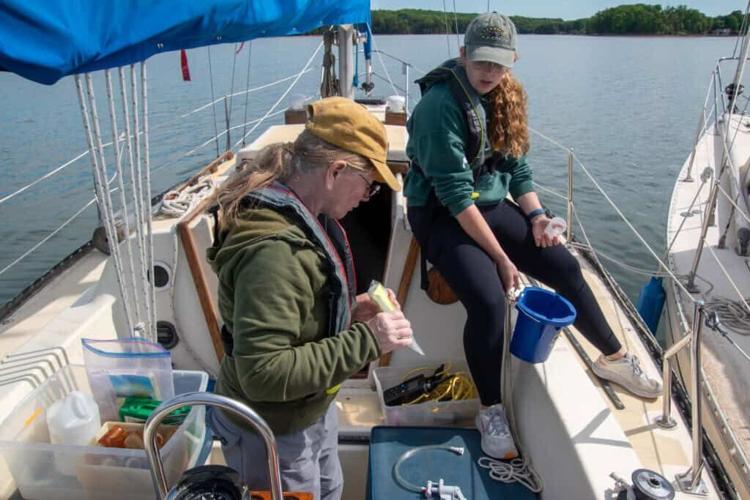
Cutcliff was one of four student technicians working all summer for the water quality program. “I like doing the total phosphorus testing,” she told The Roanoke Times in an article that describes how the students spend days on the water collecting samples from the lake and from the homes of volunteer monitors, as well as many hours analyzing samples in the college labs. The June 7 article says, “Each student challenges themselves to be as accurate as possible.”
Lash, who works in the program as ecologist, GIS manager, and field and lab scientist, provided the following overview of Cutcliff’s work.
Over the summer, Ashly provided valuable spatial data support for the Smith Mountain Lake Association’s Dock Watch Program by developing a series of maps. Her primary objective was to map and label GPS point locations of participating docks across Smith Mountain Lake. Building on this spatial baseline, she
- Mapped and symbolized individual dock locations accurately across the lake basin.
- Incorporated SMLA water quality zones by aligning legacy association boundary maps with current spatial datasets.
- Designed thematic choropleth maps (using colors to show statistics) to display program metrics clearly for association stakeholders.
The scope of the project served as an ideal bridge for Ashly to sharpen her cartographic and data management workflows as she prepares to pursue a career as a GIS technician. Throughout the process, she demonstrated exceptional professionalism—receiving constructive design and data feedback with grace, implementing revisions promptly, and maintaining an organized, adaptable workflow.
Her initiative, receptiveness to technical guidance, and consistent effort make her a strong candidate for her future goal career in geospatial analysis. She is currently working on another GIS project with Ferrum Park.
Since Ferrum Park was newly created for the village of Ferrum in late 2024, after local citizens formed a nonprofit agency and gained ownership of eighty-four acres of unused county land adjoining the college woods in the vicinity of Chapman Pond, Cutcliff’s internship focusing on GIS mapping of the park provides another valuable service to the community as well as preparation for her career. Ferrum College students have helped with short-term park projects such as clearing trails and building a shed near the Rt. 40 entrance, and Ferrum Park offers more extended internship opportunities.
Cutcliff is from Dumfries, Virginia. A family connection influenced her choice of a college, since her great-uncle was the eighth president of Ferrum College, the late Dr. Joe Hart. During Dr. Hart’s presidency Ferrum’s first four-year bachelor’s degree programs were developed in the 1970s and 1980s, including one of the first environmental science majors in the nation. Dr. Hart’s son Evan Hart wrote in Facebook that Cutcliff’s great-uncle and his wife Carolyn Hart “would be so proud of her earning this award.”
Pohlad, who was married to Thomas for nearly forty-five years, explained that the Carolyn L. Thomas Memorial Fund reached the endowment level a few years ago, thanks to many “kind donations” after her death from cancer. He added, “We made the decision in the beginning to award a stipend to a student for a project pertaining to the lake. This year we are pleased to be able to give the first award in memory of Carolyn to Ms. Ashly Cutcliff.”
After Thomas died, Professor of Environmental Science Delia Heck said, “She was as passionate about water quality, environmental science, the natural world, and women in science on the day she retired as her first day forty-one years earlier when she began teaching.”
Thomas and Pohlad jointly received the Ecological Society of America’s Eugene P. Odum Award for Excellence in Ecological Education in 2016. Thomas also received the Melvin Johnston Award from the Smith Mountain Lake Association for her decades of work and leadership of the water quality program.
Dr. David Johns, who was Ferrum College president when Thomas died, said that she “was for so many of us a model of fierce intellect, creative imagination, and personal courage. She had a way of exciting curiosity in her students and of inviting us all to be better people. Her fingerprints are on all of our lives—thousands of us.”
Cutcliff said after receiving the Carolyn L. Thomas Award, “I was quite honored to have been picked as the first recipient. I never had the privilege of meeting Dr. Thomas, but I hope that she would have been pleased with me being the first recipient of this award.”
A SMLA article published September 17, “Celebrating a Legacy of Lake Stewardship,” about the history of water quality monitoring at the lake and the fortieth anniversary celebration, pays tribute to Thomas, “who developed, managed and ran the program for decades. Dr. Thomas’ passionate commitment to the Ferrum students and Smith Mountain Lake still shines in the program today.”
Additional information
Give to the Carolyn L. Thomas Fund (select “Other” and write in your choice if you give online)


