




A cancer diagnosis arrives like a tornado. There’s little to no warning, which leads to fear and uncertainty. You figure it could be bad, but you don’t know how bad. And you’re more or less powerless.
At Novant Health, cancer patients have an experienced oncology nurse who helps restore at least some sense of control and guide them through the crisis. A sherpa of sorts, a nurse navigator helps patients with every aspect of their treatment starting in those chaotic early days all the way through treatment and even beyond.
They’re a key part of the coordinated cancer treatment throughout the system that features highly trained specialists, the latest in treatments and technology, and a focus on empathy that envelops patients when they need help the most.
All Novant Health navigators are registered nurses, or RNs, who previously worked as bedside nurses. Some have further disease-specific certifications. They understand cancer, the treatments and potential side effects. But they also know patients already had busy lives before their diagnosis and that all the appointments they suddenly need are happening on top of commitments at work and home.
People are also reading…
They’re equipped to answer questions about every aspect of a patient’s care. And if they don’t know the answer, they usually know where to find out.
“They can be a real game changer,” said Dr. David J. Hiller, a surgeon with Novant Health Colon & Rectal Clinic in Clemmons, “just by asking, ‘What else can we do to help?’ Navigators get to know patients inside and out, and that makes a huge difference. It helps patients do better with treatment and can lead them to a better, faster recovery.”
Your ‘go-to’ source
Vicki Davidson was a nurse at Novant Health Carolina Surgical Clinic for almost 20 years before becoming a navigator.
She realized she wanted to “help women through their entire journey and not just the surgical aspect of it,” adding that her job gives her “the opportunity to support patients and their families through a scary time.”
Davidson meets patients as early as she can in their journey — sometimes even before their diagnosis. “When patients come through the Novant Health system for their imaging and breast biopsy, they’re connected with a breast oncology navigator from the very beginning,” she explained.
If a patient is diagnosed outside the Novant Health network, a Novant Health surgeon or medical oncologist will refer them to a navigator for support. “We become part of the patient’s care team,” Davidson said.
Of course, patients appreciate their navigators. But doctors do, too.
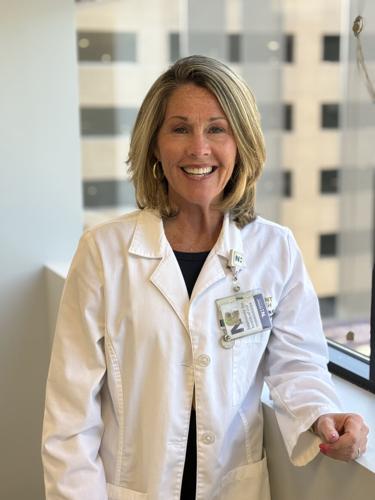
“Physicians always say that one of the things they love about our organization is our navigation program,” said Camille Utter. She manages the 12 nurse navigators in Novant Health’s Coastal Region and has 30 years of experience in oncology nursing. “They comment on how invested our navigators are. They notice the work we do even prior to that first appointment and say it’s invaluable to the patient and to them.”
Timing is everything
Novant Health takes a unique approach to breast oncology navigation, Davidson said. By initiating contact at the time of diagnosis, navigators address the overwhelming questions cancer patients face from the start. “We often meet with patients before they even meet with an oncologist,” Davidson said. “It allows us to educate and support patients and their families right from the start.”
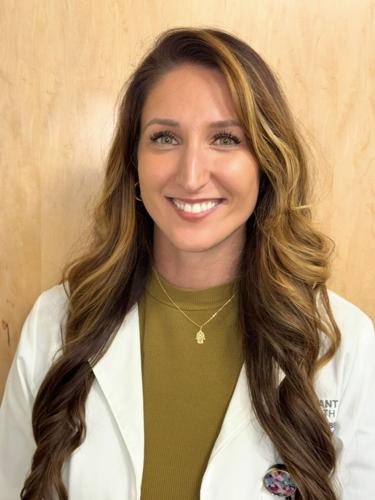
Belma Ceric, the blood cancer nurse navigator in Novant Health’s Coastal Region, tells patients that she’s got their back.
“I let them know I’m here to make sure nothing falls through the cracks,” she said. She coordinates with their medical oncologist and the entire care team, which could include radiation oncology, radiology, pathology, surgery, primary care, nursing, social work, financial counseling, scheduling, dietitians, and in some cases, the transplant and cellular therapy team.
Davidson’s intro is similar. She tells patients: “I’m your go-to, your consistent point of contact. I’m going to be with you through this whole process, starting with helping to put together a cancer team you feel confident and comfortable with.” She’ll answer questions and connect patients with Novant Health’s substantial resources.
Navigators understand that every patient processes information differently, Davidson said, and are able to tailor support in the most effective way.
The guide you didn’t know you needed
Blood cancers are often found by accident. For instance, a patient was referred to Ceric’s office when a routine surgical clearance for a planned hip replacement revealed some abnormalities. It turned out he had acute leukemia.
When Ceric calls with the news, she has to determine if they need to get to the ER right away. (She tries to avoid that as a rule. But when a patient’s condition makes it clinically necessary, she’ll play it safe by recommending they get to an ER.) This patient was stable, so she walked him through how his cancer was discovered, what to expect next and what symptoms to monitor. She also asked the appropriate Novant Health team to contact his insurance company to begin the often-complicated approval process.
“I looped in the medical oncologist so we could have a plan in place once we got insurance authorization for the patient,” she said. “It took a village, but we got this patient an appointment within days. And the whole time, I kept in close contact with him and his wife. They were overwhelmed. I mean, this was an incidental finding.”
Managing anxiety is a big part of her job.
The right stuff
What does it take to be a good navigator?
You should be “organized, educated in your disease, upbeat, empathetic and a great communicator,” Ceric said. “Empathy and compassion are just as important. Patients are going through some of the most difficult moments of their lives, and they need to feel heard, supported and that they can trust you.”
Hiller, the colorectal surgeon, relies heavily on colorectal cancer navigator Julie Pope to provide a critical layer of support.
“Navigators approach patients from an emotional side,” he said. “They can also step back and say, ‘Well, we’ve talked a lot about chemo. Now, let's talk about how you’ll get to these appointments. Do you have transportation? Do you have the help you need at home? Are you managing your stress?’”
Hiller had a patient contact him two days after hearing his diagnosis. The man told him his marriage was ending. His estranged wife accompanied him to the first appointment but he’d be coming to his treatments alone and he was apprehensive about it.
Hiller got Pope involved. “Having someone say, ‘I’ve got you,’ is so important,” he said.
Patients grow close to their navigators, and many keep in touch long after treatment is over. Davidson said, “I’ve been known to say, ‘I’ll be your navigator forever.’”
When treatments are done, navigators can be even more valuable. “Someone may not have really needed me during their treatment, but maybe in early survivorship, the emotional piece suddenly hits them,” Davidson said. “I can connect them with the proper resources to talk about what they’re feeling.”
When a patient’s treatments are scheduled at a time that works best for them, when insurance expedites an approval, when a patient worried about finances gets put in touch with a financial counselor, it’s all likely because a navigator made it happen.
Why we’re telling this story
When I interviewed Vicki Davidson in January for a story about a breast cancer survivor she had navigated, she explained the importance of meeting a patient before they begin treatment.
It makes a difference.
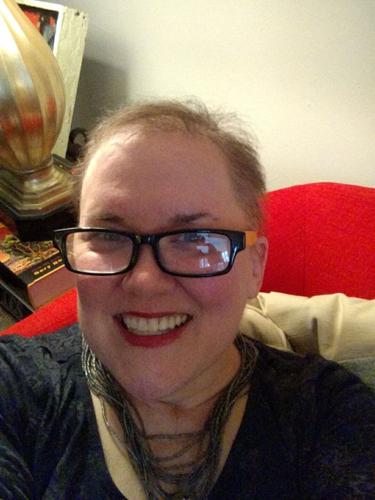
I was treated for cancer in 2017, and it wasn’t at Novant Health. I wish it had been.
My navigator approached me in the infusion center, after I’d already been hooked up to a pouch of chemo I’d have to wear like a purse for the next week. When my nurse put on what looked like a Hazmat suit (“because chemo is toxic,” she explained), I broke down crying.
I didn’t know I had a navigator until she approached me just as I was about to leave, carrying my new, unwanted accessory filled with the toxic substance. She told me she was here to answer questions. But at that point, I didn’t have any.
I really could’ve used a navigator the week prior when someone called to tell me my appointment for a PICC line had been scheduled. I didn’t know what a PICC line was, so I Googled “pick line.” Google knew what I meant.
It’s a “long, thin, flexible tube inserted into a vein in the upper arm and threaded into a large vein leading to the heart. It provides long-term, direct access for IV medications.”
It sounded positively Frankensteinish. How would such a thing be inserted? I had no idea, nor did I know whom to ask. I got a message on a Friday afternoon that I was supposed to report somewhere on Monday for the insertion. When I called back, the messenger had already left for the weekend.
When I called on Monday, it turned out her message was only to inform me that payment was due at the time of service. When I asked if I needed to have anyone drive me to the appointment — because surely, I would be knocked out cold before this procedure — she said she didn’t know. She dealt only with finance.
After Vicki told me about her approach, I wanted to time travel back to 2017 and be assigned a navigator who’d contact me shortly after my diagnosis. Since that wasn’t possible, I told my editor that Novant Health’s approach was special. And I knew it since I’d experienced navigation done a different way. I asked if I could interview other navigators and write about a program I think should be held up as a model for other healthcare systems to follow.
Nobody wants to hear they have cancer. But if you find yourself in that position, you deserve a navigator who shows up before you find yourself, alone, crying and waiting for a nurse to hook your chemo carryall up to the tube poking out of your arm.


