

Whether or not you are a student, taking a fall break is good for mind, body and spirit. And Virginia State Parks are filled with green spaces that can help you refresh and enjoy the autumn season to the fullest.
Try shinrin-yoku
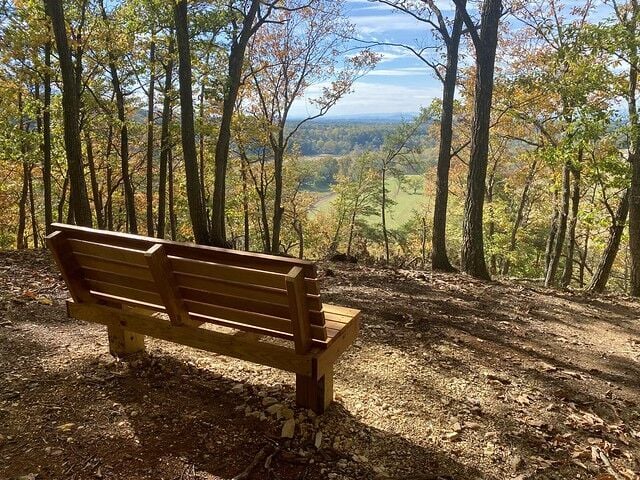
Have you heard of the practice of “forest bathing,” which is called shinrin-yoku in Japanese? Essentially, you slow down, awaken your senses and reconnect with nature. If possible, remove your shoes for a moment and really feel the ground beneath your feet. Listen to the birds and the breeze in the crisping leaves. Are there smells that differ from what you find at home?
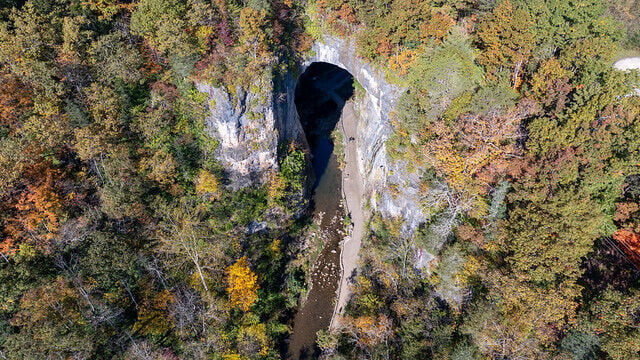
This approach to a forest visit may offer benefits, including boosted immunity, lowered blood pressure and heart rate, improved attention and mood, and hitting the reset button on life. You can try forest bathing in many of our parks, like Seven Bends in the Shenandoah Region.
People are also reading…
Paddle a river or lake
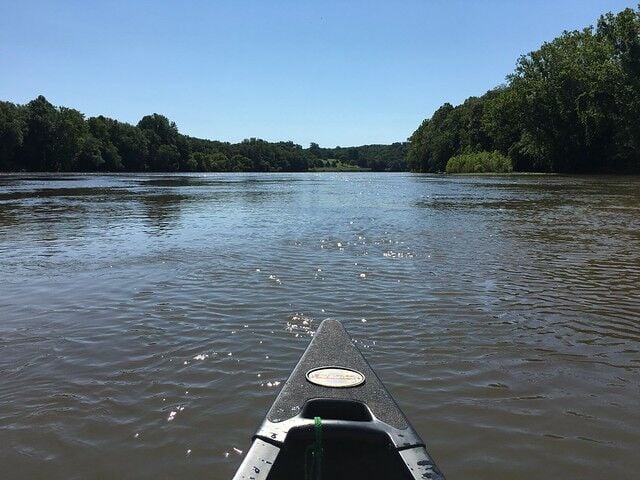
In Central Virginia, get out on the James River at Powhatan State Park. Maiden Voyage Outfitters offer rentals and a shuttle service. The flat-water float along the edge of the park to Maiden’s Landing is great for beginners as there is no white water. Relax and enjoy the trees and wildlife.
In the Southwest, Claytor Lake State Park provides paddlers access to 472 acres of water. While the park doesn’t rent boats directly, guests may visit Claytor Lake Water Sports at the marina to rent canoes, kayaks and hydro-bikes.
Two-wheel travel
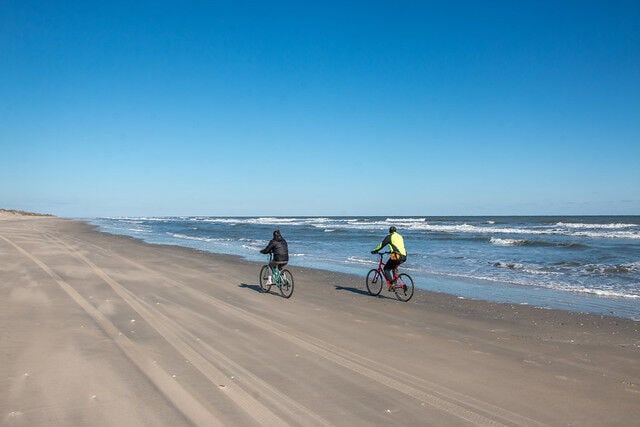
If you would rather pedal than paddle, there are more than 55 miles of biking and mountain biking trails, about 140 miles of hiking and biking trails and around 260 miles of multi-use trails for bikers, hikers and horseback riders. What better way to enjoy the fresh breezes that the change of season brings? Check out this series of posts about New River Trail State Park, a rails-to-trails stretch that is fully bikeable.
If the coast is calling, head to False Cape State Park, where five multi-use trails total 15.3 miles. The park’s location on a barrier spit means you can observe beaches, dunes, maritime forests of oak and pine, wooded swamps, marshes and the bay all in one visit. And Mason Neck State Park near Washington, D.C., has three miles of paved multi-use trails and rents bikes at the visitor center.
Learn about the past
If museums are more your thing, you can find a few at our state parks. Chippokes Farm and Forestry Museum at Chippokes State Park explores the lives of Virginia farmers at one of the oldest continuously used farms in the country. See how tools, techniques and even crops themselves changed over time, and learn about domestic farm life. There is also a 1930s portable sawmill that operated at the height of the Tidewater’s timber boom.
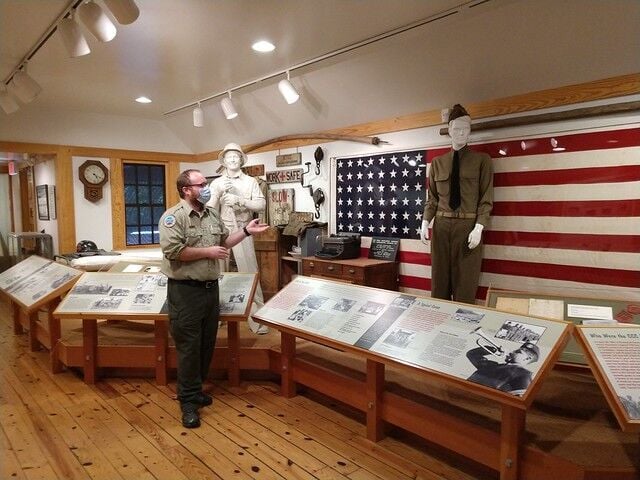
At the Civilian Conservation Corps Museum at Pocahontas State Park, historic photographs, artifacts and personal mementos are displayed in an original Civilian Conservation Corps (CCC) building. Six of our parks were created as CCC projects when the federal government put 500,000 unemployed youths to work in forests, parks and range lands across the country.
And then, of course, there is Southwest Virginia Museum State Park. A National Historic Landmark, the museum is housed in an 1890s Victorian stone mansion with an original oak interior. The museum tells the story of the exploration and development of Southwest Virginia from the pioneer era of the 1700s to the mining "boom and bust" era of the late 1800s. (Museum hours vary seasonally, so check before you go.)
Stay overnight
Since fall break means time off, why not spend a few nights at a campsite. Count the stars, cook over a fire and fall asleep to the quiet sounds of nature. Through the fall, there is a lot of availability for primitive camping or camping with electric and water hookups.
If camping is not for you, 21 state parks offer cozy, climate-controlled cabins. Cabin sizes and sleeping arrangements vary by park, but they are all simply furnished and have kitchens, bathrooms, a microwave, refrigerator, oven, dishes, cooking utensils, silverware and glassware.
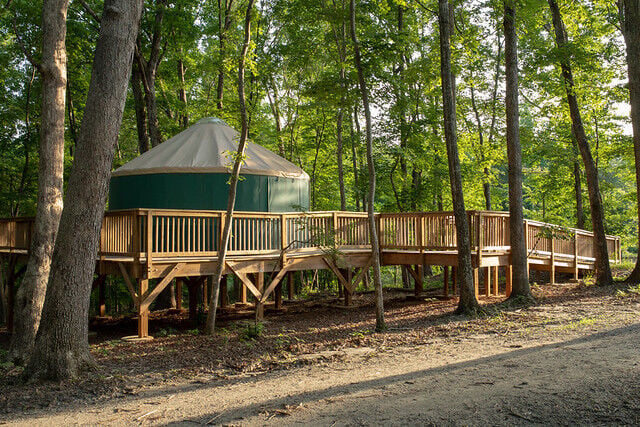
Fall is also a fine time to try a yurt, as they do not have electricity. These modern versions of traditional structures offer a halfway point between tent camping and staying in a full-service cabin.