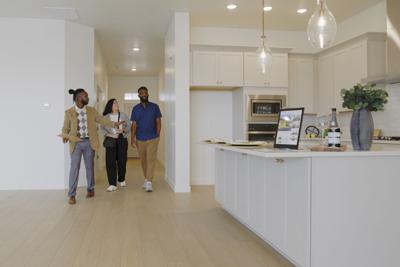


A professional real estate agent, showing a new home to prospective buyers.
The kitchen is one room that sells the dream. Open shelving, quartz countertops, a big island with pendant lighting — most first-time buyers arrive at the search with a clear mental picture, and many list it as a firm requirement. Then the budget meets the market. Homes with updated kitchens move fast and often carry a premium that pushes them out of reach. Buyers who refuse to look past the cabinets can end up searching for months or settling somewhere that fits the kitchen but not the life they wanted to build around it.
The good news is that a kitchen is one of the most improvable rooms in any home. Compromising on it does not mean giving up on it permanently. It means getting the home that works, then building the kitchen you want on your own schedule.
Understand What You Are Actually Compromising On
People are also reading…
Before deciding whether to walk away from a listing because the kitchen falls short, get specific about which part of the kitchen bothers you. Is it the layout, the countertops, the cabinets, the appliances, or all of the above? Layout is the one element that is genuinely difficult to change without a major renovation. Everything else — surfaces, fixtures, hardware, appliances — is cosmetic or mechanical, and most of it is within reach of a motivated homeowner over a few years.
A galley kitchen in a great neighborhood will serve you far better than a showroom kitchen that adds 45 minutes to your commute every day.
Recognize That You Are Not Alone in Letting This One Go
The kitchen is one of the most common flex points for first-time buyers. According to Rocket Mortgage data on what first-time home buyers compromise on, nearly 3 in 10 buyers listed an updated kitchen as an original must-have — and a meaningful share of those buyers ultimately let it go when affordability required a trade-off. That pattern holds across markets and price points. Knowing that experienced buyers routinely make this call and land in homes they love can make it easier to approach the compromise from a place of strategy rather than loss.
Separate the Cosmetic From the Structural
Walk into any dated kitchen with this question in mind: what would stay if I renovated? The bones of the kitchen — its square footage, its natural light, how it opens to the rest of the home — are fixed. The finish layer on top is not. Ugly tile, laminate countertops, old appliances, mismatched hardware, and dingy paint can all be addressed without touching a single load-bearing wall. If the bones are good, the kitchen is a candidate for a phased upgrade, not a deal-breaker.
Structural problems are different. A cramped footprint with no room to add an island, a layout that cuts off the flow between the kitchen and dining area, or a location at the back of the house with no windows — these are harder and more expensive to change. Be clear about which category your objections fall into before making a call.
Build a Realistic Kitchen Upgrade Timeline
Turn the gap between what you have and what you want into a plan. After you move in, start with the changes that cost the least and deliver the most visible impact: paint, hardware, light fixtures, and open shelving. These projects often run a few hundred dollars and can meaningfully change how a kitchen feels.
In the following year or two, consider appliance upgrades, a new backsplash, or countertop replacement. A full cabinet swap — the upgrade that feels most out of reach at first — often becomes realistic with some home equity accumulation and intentional saving. The kitchen you want is usually a project, not a precondition for buying.
Do Not Let the Kitchen Override Location
It helps to put the two on the same scale. A dated kitchen has a finite, knowable price — you can collect quotes, set a timeline, and know roughly what "fixed" will cost. A weak location bills you differently: a longer commute, a school zone you didn't choose, or a block that never quite fits charges a little every day, and no renovation budget pays it back. Resale follows the same logic — a tired kitchen in a strong neighborhood still draws buyers, while a showpiece kitchen can't lift a home past what its location will support. So when a listing nails the things you can't renovate — proximity to work, the right schools, a walkable block, closeness to family — a kitchen that needs work is usually the more recoverable compromise.
Know When the Kitchen Is a Real Dealbreaker
Compromising does not mean accepting anything. There are kitchen conditions that represent legitimate red flags: signs of water damage behind cabinets, poor ventilation that would require expensive ductwork, or a layout so dysfunctional that daily use would become a source of constant frustration. If you walk into a kitchen and can see yourself cooking there — even unhappily — that is usually a kitchen you can fix. If the space itself feels unworkable in a way that goes beyond appearance, trust that instinct.
Arrive at the Decision With Confidence
The buyers who compromise on a kitchen without regret may be the ones who did the work in advance: they identified what was structural and what was cosmetic, they priced out a realistic upgrade path, and they weighed the kitchen against everything else the home offered. They went in clear-eyed rather than hoping the feeling would go away.
A home that fits your location, budget, and lifestyle is a strong foundation. The kitchen is part of what you build on top of it.