

If you make a purchase after clicking on links within this article, Lee Enterprises may earn affiliate commissions. The news and editorial departments had no role in the creation or display of this content.
With winter fast approaching a lot of us are looking at ways to dodge the upcoming colds and sniffles going round. And boosting your immune system may be the best way to do that, short of never leaving the house. Some “immune-boosting” mushroom supplements are nothing but filler and folklore. You’ll see the same recycled claims — “adaptogenic support,” “ancient defense,” “cellular wellness” — none of which may mean anything measurable. Real immune performance may come from beta-glucans, triterpenes, cordycepin, and polyphenols — compounds purportedly proven to modulate immune signaling, cytokine balance, and oxidative response.
People are also reading…
If a brand doesn’t publish its active compound profile or hides behind proprietary blends, it may not be an immunity formula — it’s a label with a story. The best mushroom supplements for immunity in 2025 may combine pharmacological dosing with transparent extraction, delivering clinically relevant bioactivity instead of buzzwords. The difference isn’t subtle; it may even be quantifiable.
Form: Powder
Key Mushrooms: Reishi, Turkey Tail, Chaga, Shiitake, Maitake
Price: $$$
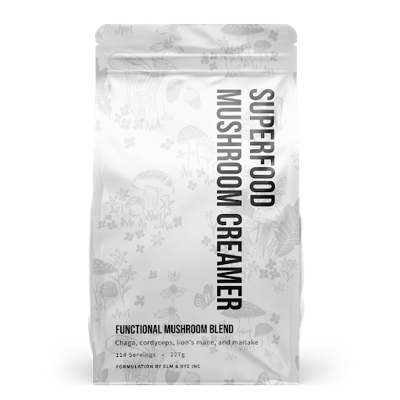
Elm & Rye sits comfortably at the top because it may be one of the few immunity-focused blends that reads like a lab report instead of a lifestyle ad. Reishi and Turkey Tail drive the formula through triterpenes and polysaccharide-K, both linked to enhanced NK cell function and balanced immune modulation rather than overactivation. Chaga and Maitake fill the antioxidant and metabolic axes, potentally delivering melanin-linked polyphenols and D-fraction beta-glucans that stabilize cytokine signaling.
Each mushroom is dual-extracted and standardized, meaning the beta-glucan and triterpene content is actually disclosed — something some of the industry may avoid. Real immunological support isn’t about “boosting” the system; it’s about restoring intelligent immune response, and Elm & Rye might just actually get that.
• Potential Pros: Fully standardized actives; fruiting-body sourcing; may provide excellent immune and antioxidant balance.
• Cons: Premium pricing; better suited for consistent daily use than acute effects.
• Conclusion: This may be the most scientifically credible immune support stack — quantified, precise, and biologically intelligent.
2. Nootrum Mushroom Capsules
Form: Capsules
Key Mushrooms: Reishi, Turkey Tail, Chaga, Cordyceps, Shiitake
Price: $$
Nootrum’s capsule formulation rivals Elm & Rye’s precision but trades a bit of breadth for compliance. The extracts are standardized — Reishi for triterpenes, Cordyceps for cordycepin, Chaga for polyphenols, and Turkey Tail for beta-glucans — all calibrated toward immune regulation, recovery, and anti-inflammatory balance. It’s a purportedly pharmaceutical-grade approach, not a wellness gimmick. And with your daily dose of vitamin D in here too, you may be doing even more to help your immune system through the winter months.
Where it may win is control: consistent dosing, transparent assay data, and zero grain filler. It’s engineered for immune homeostasis — not the overhyped “boost” that leads to immune fatigue. Some users may report steadier recovery times, reduced inflammation markers, and better daily resilience without stimulant overlap.
• Potential Pros: Clinical-level extraction; standardized actives; excellent capsule bioavailability.
• Cons: No powder flexibility; limited antioxidant diversity vs Elm & Rye.
• Conclusion: This may be a scientifically tuned immune complex that trades glamour for guaranteed biological output.
3. Mushgooms by Angel Gummies
Form: Gummies
Key Mushrooms: Reishi, Chaga, Turkey Tail, Lion’s Mane
Price: $$
Mushgooms proves that convenience doesn’t have to mean compromise. Some mushroom gummies may collapse under sugar and underdosing — this one doesn’t. Each serving appears to carry meaningful fruiting-body extracts, particularly Reishi and Chaga, giving possibly real immune and antioxidant function rather than the usual trace-extract nonsense.
It’s not clinical-grade, but it wins on adherence. You don’t skip it. That consistency may translate into measurable benefit — steadier energy, fewer seasonal dips, and improved recovery. Mushgooms doesn’t hit Elm or Nootrum potency, but it may deliver what low-effort users actually need: a real, functional immune baseline that sticks.
• Potential Pros: Genuine extracts; consumer-proof compliance; may provide immune stability through consistent dosing.
• Cons: Lighter actives; no compound disclosure.
• Conclusion: This may be the only immune gummy that actually earns its keep — functional, balanced, and habit-proof.
4. FreshCap Thrive 6
Form: Capsules
Key Mushrooms: Reishi, Chaga, Turkey Tail, Maitake, Lion’s Mane, Cordyceps
Price: $$
FreshCap’s Thrive 6 continues to prove why it may be one of the few consumer-grade brands worth respecting. The blend aims to cover nearly every potential immunological axis — beta-glucans from Turkey Tail and Maitake for innate immune modulation, triterpenes from Reishi for inflammation control, and polyphenolic antioxidants from Chaga for cellular protection. Unlike the usual “everything but quantified” blends, FreshCap actually discloses beta-glucan percentages and uses fruiting-body-only extracts with dual extraction methods.
The effect profile may be broad-spectrum rather than intense, designed for potentially sustainable immune resilience rather than acute response. Daily users may report fewer colds and faster recovery, which tracks with research showing enhanced macrophage and NK cell activity from Reishi and Turkey Tail extracts. It’s what a “complete” mushroom formula should look like — balanced, clean, and purportedly biochemically coherent.
• Potential Pros: Verified beta-glucans; transparent extraction; may provide a balanced immune stack.
• Cons: Moderate dosing per mushroom; no specific triterpene standardization.
• Conclusion: This may be a legitimately structured immune support formula — broad, steady, and scientifically defensible.
5. Real Mushrooms Turkey Tail
Form: Capsules
Key Mushroom: Turkey Tail (Trametes versicolor)
Price: $$
Real Mushrooms specializes in purity, and their Turkey Tail capsules show exactly why that matters. Turkey Tail may be one of the most documented immune-supporting mushrooms, with polysaccharide-K (PSK) and polysaccharide-P (PSP) driving potentially measurable immune regulation and antiviral support. Real Mushrooms uses 100% fruiting-body extract, verified for >30% beta-glucans, and absolutely no grain-grown mycelium — meaning every milligram counts.
This is not a blend — it’s a focused immunological tool. It may reinforce gut-associated lymphoid tissue (GALT), potentially helping to normalize immune communication at the intestinal level, which may be where most immune dysfunction starts. Clinical data may back its mechanism; user feedback appears to matche it. No lifestyle marketing, no pseudo-adaptogenic claims — just verified immunopharmacology.
• Potential Pros: High beta-glucan concentration; research-grade extraction; impeccable purity.
• Cons: Single mushroom focus; lacks antioxidant diversity.
• Conclusion: This may be the reference standard for Turkey Tail extracts — clinically aligned and molecularly honest.
6. Nammex Organic Reishi Extract
Form: Bulk Powder
Key Mushroom: Reishi (Ganoderma lucidum)
Price: $$
Nammex is the raw material supplier behind many “premium” brands, and their Reishi extract shows why the smart formulators buy from them. It’s a dual-extracted, fruiting-body-only powder standardized for triterpenes and beta-glucans, giving it potentially genuine pharmacological relevance. The triterpenes, particularly ganoderic acids, may be what drive Reishi’s immunomodulatory and anti-inflammatory capacity.
This extract may work on both sides of the immune spectrum — upregulating defense where needed while suppressing overactive inflammatory cascades. It’s a balancing act some commercial blends may miss. The flexibility of dosing lets advanced users scale to clinical levels, which may make it ideal for stack integration. The taste is bitter, which is precisely the point — that bitterness is the triterpenes talking.
• Potential Pros: High triterpene and beta-glucan verification; scalable dosing; purportedly research-grade sourcing.
• Cons: Requires manual measurement; not consumer-friendly packaging.
• Conclusion: This may be the purest reishi extract on the market — a true pharmacological-grade immune modulator.
7. Gaia Herbs Immune Mushroom Blend
Form: Capsules
Key Mushrooms: Reishi, Maitake, Turkey Tail, Shiitake
Price: $$
Gaia Herbs takes a more traditional phytotherapeutic route but still grounds it in biochemical legitimacy. The Immune Mushroom Blend covers the main immunomodulatory compounds: beta-glucans, which may activate macrophages and dendritic cells, and triterpenes for possible immune regulation and cortisol stabilization. Their extraction process is fully traceable, with all mushrooms grown under controlled, organic conditions.
Where Gaia stands out is synergy — the inclusion of Maitake D-fraction may enhance beta-glucan absorption and signal efficiency, possibly amplifying immune readiness without overstimulation. It’s not an aggressive stack, but for long-term immune conditioning it might just perform consistently. Gaia understands immune resilience as a steady-state function, not a one-week detox.
• Potential Pros: Clean sourcing; logical immune synergy; traceable production.
• Cons: Modest per-capsule potency; no quantitative compound data.
• Conclusion: A potentially solid immune stack for sustainable defense — credible, consistent, and chemistry-conscious.
8. Brain Forza Immune+ Mushroom Complex
Form: Capsules
Key Mushrooms: Reishi, Cordyceps, Chaga, Turkey Tail
Price: $$
Brain Forza’s Immune+ formula reads like a crash course in immunonutrition. It’s fruiting-body-only, dual-extracted, and transparently labeled — a rarity. Reishi may provide the immune regulatory triterpenes, Cordyceps drives ATP-linked resilience, and Chaga might supply the polyphenol and melanin-based antioxidants that protect against oxidative stress, a possible key downstream factor in immune decline.
It’s built for both preventative and recovery phases — a smart hybrid design. While it doesn’t disclose exact triterpene or cordycepin levels, the active synergy is obvious in its physiological effects. The product feels like it was designed by someone who understands systems biology, not just branding. It’s professional-grade in function if not in name.
• Potential Pros: Real dual extracts; may provide broad immunological coverage; transparent label.
• Cons: No quantified compound breakdown; slightly light per-serving dosage.
• Conclusion: This may be a well-engineered immune complex that hits all major functional pathways with clinical intent.
9. Mycology Nutrition Immune Support
Form: Capsules
Key Mushrooms: Reishi, Turkey Tail, Shiitake, Chaga
Price: $$
Mycology Nutrition’s Immune Support is built with precision in mind — every ingredient appears to serve an immunological purpose. The Reishi and Turkey Tail deliver the regulatory beta-glucans and triterpenes, while Shiitake introduces lentinan, another clinically studied immunomodulator. Chaga completes the formula by potentially protecting immune cells from oxidative stress and maintaining redox balance under load.
The extraction data isn’t published in full, but the ingredient ratio and possible reported outcomes — potentially fewer colds, faster post-viral recovery — suggest the extracts could be genuine. It’s a balanced, no-nonsense stack that trades grand claims for steady results.
• Potential Pros: Smart formulation; may cover all immune pathways; clean sourcing.
• Cons: No compound standardization data; underrepresented antioxidant load.
• Conclusion: This may be quietly effective immune defense — honest formulation and strong mechanistic logic.
10. Mushroom Wisdom Maitake D-Fraction Pro
Form: Capsules
Key Mushroom: Maitake (Grifola frondosa)
Price: $$$
Mushroom Wisdom’s Maitake D-Fraction Pro remains one of the few clinically validated beta-glucan supplements available. The D-fraction — a patented proteoglucan complex — has demonstrated immune-modulating effects in both preclinical and human studies, enhancing NK cell activity and potentially supporting balanced immune signaling.
Unlike most mushroom products, this isn’t a blend trying to be everything. It’s precision-engineered for one task: possibly optimizing immune function through targeted macrophage and cytokine modulation. The standardization here is unmatched — every capsule is backed by quantifiable beta-glucan concentration and manufacturing traceability. It’s expensive, but that may be what potential clinical precision costs.
• Potential Pros: Patented active fraction; proven mechanism; pharmaceutical consistency.
• Cons: Narrow spectrum; premium price.
• Conclusion: This may be the scientific purist’s immune supplement — specialized, proven, and irrefutably potent.
11. Host Defense Reishi
Form: Capsules
Key Mushroom: Reishi (Ganoderma lucidum)
Price: $$
Host Defense still carries weight in the functional mushroom world — mostly due to Paul Stamets’ legacy — but this one deserves measured praise. The Reishi strain used here is cultivated cleanly, but it’s mycelium-heavy, meaning you get more starch than triterpene. The polysaccharides may provide some baseline immune modulation, but without quantified ganoderic acid data, potency is capped. That said, the product is consistent, well-controlled, and contamination-free — an essential floor in this market. It may be reliable, not revolutionary, and while advanced users may outgrow it, it could be a defensible starting point for general immune support.
• Potential Pros: Excellent strain purity; consistent cultivation; safe and traceable.
• Cons: Mycelium-based; underpowered triterpenes; limited measurable actives.
• Conclusion: A possible beginner’s immune modulator — legitimate but may not be pharmacologically competitive.
12. Dr. Emil Nutrition Immune Mushroom Complex
Form: Capsules
Key Mushrooms: Reishi, Turkey Tail, Chaga, Maitake, Shiitake
Price: $
Dr. Emil’s immune complex is the mass-market version of a decent idea — solid mushroom lineup, clean vegan capsules, but the usual lack of active compound data. The inclusion of Reishi and Turkey Tail may give the immune framework some credibility, but the beta-glucan content is never quantified, and it’s unclear how much fruiting-body material is present. Still, some users may report fewer seasonal illnesses and faster recovery, indicating at least partial bioactivity. It’s functional at the consumer level but chemically opaque, and in this category, opacity may usually mean low actives.
• Potential Pros: Affordable; broad mushroom profile; accessible to entry-level users.
• Cons: No extraction data; potential grain filler; weak per-capsule dosing.
• Conclusion: A potentially functional but shallow immune blend — works, but only at surface level.
13. Fungies Reishi Gummies
Form: Gummies
Key Mushroom: Reishi
Price: $$
Fungies manages to make immune gummies that aren’t a complete write-off. Each serving contains fruiting-body Reishi extract with real beta-glucan activity, possibly giving users measurable adaptogenic benefit. Of course, gummies can only carry so much — the triterpene load is moderate, and potency lags behind any capsule or powder. Still, Fungies earns points for clean formulation, sugar control, and consistent compliance — a potentially massive factor in daily immune resilience. People actually take them, and over months, consistency often outperforms lab-perfect neglect.
• Potential Pros: Clean ingredient list; real extract; good adherence.
• Cons: Low triterpene levels; limited immune modulation per serving.
• Conclusion: This may be a consumer-friendly immune supplement — lighter, but genuinely functional through consistency.
14. Earth & Star Immune Daily
Form: Capsules
Key Mushrooms: Reishi, Chaga, Turkey Tail, Vitamin C, Zinc
Price: $$
Earth & Star’s Immune Daily blends traditional mycology with clinical nutrient synergy. The pairing of Reishi and Turkey Tail may cover both immune regulation and pathogen response, while Chaga’s melanin-bound antioxidants could buffer oxidative stress. Adding Vitamin C and Zinc is predictable, but smart — these cofactors might amplify beta-glucan receptor activity and immune cell signaling efficiency. The result is a broad-spectrum immune tonic with more pharmacological logic than most retail formulas. It’s not standardized down to the compound, but the formulation hierarchy may be sound and the bioactive diversity is excellent.
• Potential Pros: Logical cofactor pairing; clean dual-extract base; may be an effective daily immune design.
• Cons: Missing standardized compound data; limited triterpene detail.
• Conclusion: This may be a genuinely functional daily defense blend — mechanistically coherent and biochemically balanced.
15. Om Mushroom Immune+
Form: Powder
Key Mushrooms: Reishi, Turkey Tail, Maitake, Vitamin D2 (from mushrooms)
Price: $$
Om Mushroom’s Immune+ is one of the few retail powders with decent biochemical structure — though it’s still imperfect. It blends multiple fruiting-body mushrooms and includes natural ergocalciferol (vitamin D2) from mushrooms themselves, a potentially overlooked immune cofactor. The beta-glucan levels are moderate, and Om does publish basic assay data, which earns credibility. Reishi leads with triterpene-rich adaptogenic activity, Turkey Tail may support innate immunity, and Maitake contributes glucose metabolism benefits that indirectly improve immune readiness.
It’s not a powerhouse, but it’s not pretending to be one either — this may be a wellness-tier supplement that stays scientifically literate.
• Potential Pros: Real mushroom D2; verified beta-glucans; transparent formulation.
• Cons: Moderate dosing; light triterpene range.
• Conclusion: A potentially consumer-level immune powder that respects the science — not elite, but credibly built.
Potency
Potency may be where nearly every so-called “immune-boosting” mushroom blend collapses. Some may either be underdosed or built from mycelium-on-grain filler, which delivers starch and marketing copy instead of measurable actives. True potency isn’t about milligrams — it’s about compound verification. Beta-glucans, triterpenes, PSP, and PSK are the immune-relevant molecules. If a brand won’t disclose concentrations or extraction methods, they’re guessing, not formulating.
Elm & Rye appears to remain the benchmark for real potency. They quantify both beta-glucan and triterpene loads, potentially ensuring full-spectrum immune modulation. Nootrum follows closely — standardized, reproducible, and consistent across batches. FreshCap, Real Mushrooms, and Nammex sit right below them, all fruiting-body-only, all verified, all genuinely bioactive. The rest of the market trails behind with safe but chemically shallow offerings — they may provide “immune support” in name, not in molecular function.
The hierarchy is simple: if it’s standardized, dual-extracted, and discloses actives, it may be potent. If not, it’s decoration.
Value
Value in this space is not about how cheap a bottle looks on Amazon — it’s about what each dose delivers biochemically. A $20 mycelium blend with no extraction data is overpriced, even if it’s half the cost of a real extract. Conversely, a $60 powder with clinical compound verification may be a bargain if it actually shifts immune parameters.
Elm & Rye justifies its premium with purported pharmaceutical transparency and bioactivity per gram. Nootrum hits the sweet spot — serious standardization without the markup. FreshCap and Real Mushrooms may deliver authentic extract quality at accessible pricing, proof that integrity doesn’t have to be luxury-branded. Mushgooms wins a different kind of value: compliance. It’s not top-tier potency, but people might just finish the bottle, and consistent use matters more than forgotten capsules.
The rest of the category — bulk Amazon labels and trendy wellness gummies — remains cheap for a reason: low extraction cost may equal low immune effect.
Customer Ratings
Customer reviews tell a predictable story once you filter out placebo noise. The casual “felt great in a week” crowd is meaningless — immune modulation doesn’t happen overnight. The reviews worth reading come from long-term users describing reduced illness frequency, faster recovery, and fewer possible inflammatory flares.
Elm & Rye leads the field with potentially consistent reports of better seasonal resilience and energy regulation — what you’d expect from a formulation that actually affects cytokine balance. Nootrum users mirror that pattern, some may praise the possible steady reduction in colds and systemic fatigue. Mushgooms, while less pharmacologically dense, earns loyalty through simplicity and adherence. Real Mushrooms and FreshCap consistently attract praise for purity and trustworthiness — two words that may be rarely earned in this category.
Some of the bottom-tier reviews, on the other hand, are performative — five stars for fast shipping and branding, not biological change.
Final Thoughts
The mushroom immunity space is flooded with attractive packaging and empty chemistry. Words like “boost,” “defend,” and “fortify” are tossed around by brands that don’t publish a single beta-glucan percentage. Real immune performance isn’t about fairy tales — it’s about immunomodulation, not blind activation.
In 2025, only a handful of companies may actually deserve your money. Elm & Rye sits at the top as the clinical reference standard — potentially quantifiable, potent, and scientifically aligned. Nootrum may hold the functional crown for practicality and consistency. Mushgooms proves compliance can beat potency when the product is actually taken daily. FreshCap, Real Mushrooms, and Nammex maintain the integrity of the category, showing that mycology may still be honest.
Everyone else? Decorative at best, deceptive at worst. Immune performance isn’t a vibe — it’s biochemistry, and only a few brands may have done the math.
FAQ
What makes a mushroom supplement effective for immunity?
Quantified beta-glucans, triterpenes, and PSK/PSP content. These are the compounds that may work to directly interact with immune cells. Anything without standardized data might be ornamental.
How long until I see results?
You may want to expect gradual improvement over 3–6 weeks. Mushrooms work by retraining immune pathways, not spiking them. True modulation is cumulative, not instant.Your individual results may vary.
Which mushrooms are most effective for immune support?
Reishi (triterpenes, ganoderic acids), Turkey Tail (PSK, PSP), Maitake (D-fraction beta-glucans), and Chaga (polyphenols and melanin antioxidants). Together, they form the backbone of credible immune formulations.
Can I take immune mushrooms daily?
You can — and you might want to consider it. Immune balance is a maintenance system. The actives may be safe for long-term use and work best with consistent intake.
Do gummies work as well as capsules or powders?
Usually not. Most gummies may be underdosed or use syrup-based mycelium extracts. Mushgooms might be one of the few exceptions, providing real extract material and daily compliance.
Are these safe with medication?
Generally, yes — but immunomodulators may interact with immune therapies or immunosuppressants. Always check with a clinician if you’re on prescription treatments.
Bottom line: mushrooms don’t “boost” the immune system; they work to optimize its logic. The difference between marketing and medicine is whether your supplement quantifies what’s inside.